How Israel’s Lebanon Campaign Exposed the Fragility of the Trump–Iran Understanding
The Setup: Diplomacy at Altitude
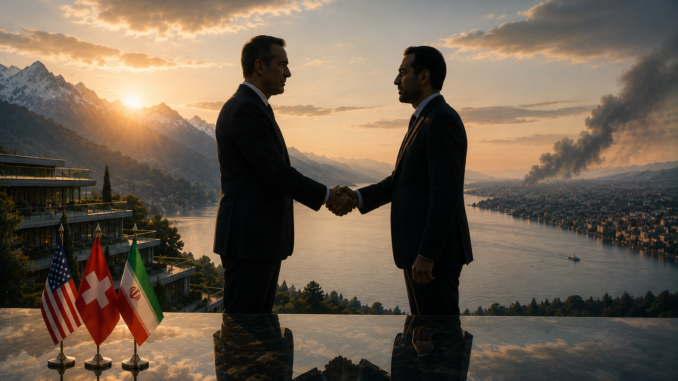
Picture the scene: a sleek Alpine resort perched above Lake Lucerne, the kind of place where the air is clean, the views are stunning, and the conversations are anything but relaxed. That was Bürgenstock, Switzerland, in June 2026, where U.S. Vice President JD Vance sat across from Iranian negotiators, with Qatari and Pakistani diplomats quietly holding things together.
The goal was ambitious stitch together an interim agreement that would dial down tensions, reopen the Strait of Hormuz to shipping, and maybe, just maybe, lay the groundwork for something more lasting. After months of conflict and brinkmanship, both sides had reasons to deal. Iran was feeling the economic squeeze. The Trump White House wanted a win it could point to. The stars, for once, seemed aligned.
What nobody in that conference room had fully accounted for was what was happening roughly 2,000 miles to the southeast. In Lebanon, Israeli forces were pushing deeper into Hezbollah territory and that, it turned out, would change everything.
What the MoU Actually Said
The memorandum of understanding that emerged from those talks was, in diplomatic terms, a careful piece of work. A 60-day ceasefire extension. A direct hotline for shipping concerns through Hormuz. Asset releases. A de-confliction mechanism for Lebanon. President Trump called it a foreign policy breakthrough, and in fairness, getting the U.S. and Iran to sign anything — even electronically — was no small thing.
Switzerland made sense as the host. Bürgenstock has a quiet history of exactly this kind of discreet, high-stakes meeting. No press mob, no street protests, no symbolically charged setting to argue about. The presence of Pakistan and Qatar as mediators was shrewd too — both have working relationships with Washington and Tehran, rare in today’s fractured diplomatic landscape.
But the deal had a hole in it, and everyone at the table probably knew it. The question of Iran’s regional proxies Hezbollah, in particular , was left unresolved. Whether that was a deliberate trade-off or just too thorny to tackle head-on, it was the omission that would come back to bite.
Enter Israel: The Complication Nobody Wanted to Name
While the Swiss talks were unfolding, Israeli forces were continuing military operations in southern Lebanon while conducting strikes against Hezbollah-linked targets. Prime Minister Netanyahu framed it as self-defence — a response to rocket fire and infiltration. As far as Israel was concerned, it had nothing to do with whatever was happening in the Alps.
Tehran didn’t see it that way. Iran has never viewed Hezbollah as just a proxy; it’s a cornerstone of the “Axis of Resistance,” the network of armed groups Iran uses to project power across the region. When Israel bombs that network, Iran feels it directly. So Iranian negotiators did what you’d expect: they started linking the Lebanon situation to the deal. Progress on one front meant movement on the other.
What happened next: As tensions escalated in Lebanon, negotiations faced disruptions and scheduling adjustments, complicating diplomatic momentum. Oil markets twitched. The Hormuz issue was back on the table, which rather defeated the point of the whole exercise.
The Trump administration generally sought to treat the Lebanon conflict as distinct from the core U.S.–Iran negotiating track. From Washington’s perspective, this approach was understandable, but it underestimated how interconnected regional conflicts had become.
The Blindspot, Explained
Here’s the thing about the Swiss Blindspot — it wasn’t a failure of intelligence or of intent. It was a failure of framing. Washington went into Bürgenstock treating the Iran nuclear-and-sanctions file as one thing and Lebanon as another. Iran and Israel both see them as the same thing.
Reports suggested that Israeli officials were uneasy about aspects of the evolving agreement and its potential implications for Iran. Whether Israel’s Lebanon campaign was designed to complicate the talks, or whether that was just a useful side effect, the result was the same: the U.S. was constantly playing catch-up.
This is the enduring problem with proxy warfare. You can negotiate all you want at the top level, but if the underlying conflict keeps burning, the agreements stay fragile. Iran’s willingness to hold nuclear talks hostage to events in Lebanon isn’t cynicism — it’s strategy. And it works.
The Wider Fallout
The ripple effects went well beyond the negotiating room. European governments watching energy prices fretted. Gulf Arab states — always uneasy about Iranian influence — hedged their support. Pakistan and Qatar gained diplomatic clout but also found themselves squeezed from multiple directions.
On the military side, Israel’s operations may well have set Hezbollah back. But tactical gains can have strategic costs. Every airstrike in Beirut risked strengthening hardline narratives in Tehran and complicating prospects for diplomatic engagement. It’s a dynamic that’s played out before, and it never ends well for anyone.
The lesson here isn’t that diplomacy is pointless, or that Switzerland was the wrong venue, or even that the deal was badly designed. The lesson is that in the Middle East, you cannot surgically separate a bilateral deal from the regional ecosystem around it. Lebanon, Yemen, Iraq — they’re not side issues. They’re part of the same picture.
Where Do We Go From Here?
None of this means Bürgenstock was a failure. The 60-day window bought time, and time in diplomacy is genuinely valuable. Technical discussions reportedly continued even as the headlines got worse. Both sides still have reasons to want a settlement — Iran needs economic relief, and Trump needs a deal he can sell at home.
But for the process to hold, the next round has to be built differently. That means bringing Lebanon into the frame rather than hoping it stays quiet. It means finding quiet channels with Israel that give Netanyahu a stake in the outcome rather than an incentive to torpedo it. And it means being honest that confidence-building in this region requires more than nuclear limits — it requires verifiable restraint across the whole proxy network.
The bottom line: Geopolitics doesn’t respect neat compartments. The Lebanon campaign didn’t kill the Iran deal, but it exposed how thin the foundations were. Building something durable means staring the blindspots in the face rather than hoping they stay off-screen. That’s harder, slower, and less satisfying than a headline-grabbing summit. But it’s the only version that actually holds.
The views presented in this article are the authors’ own and do not necessarily reflect the views of Global Strategic Forum – GSF.

Imran Bhatti
Imran Bhatti holds an M.Phil. in Governance and Public Policy and professional certifications as a Certified Information Systems Security Professional (CISSP) and Project Management Professional (PMP). He is a geopolitical analyst and writer specializing in energy geopolitics, great-power competition, Eurasian strategic affairs, and South Asian security dynamics. His work explores regional geopolitics, border disputes, infrastructure, security, and economic statecraft in an increasingly multipolar world.
- Imran Bhatti

- Imran Bhatti

- Imran Bhatti

- Imran Bhatti

Leave a Reply