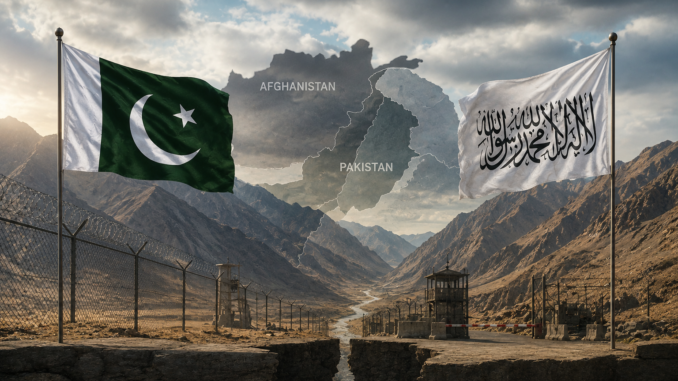
The return of the Taliban to power in Afghanistan in August 2021 has significantly reshaped the regional security landscape, with Pakistan facing a notable surge in cross-border terrorism and militant violence. As relations between Islamabad and Kabul continue to deteriorate, concerns over regional stability, security cooperation, and the alleged use of Afghan territory by militant groups have become increasingly acute.
Ever since the resurgence of Taliban in Afghanistan in Aug 2021 ,after toppling the government of the president Ashraf Ghani and seizing the power in Afghanistan, Pakistan has witnessed spectacular spike in terrorist attacks and suicidal incidents on its territory which have been sponsored and executed by the proscribed terrorist outfit Tehreek e Taliban Pakistan ( TTP )and its other affiliates from Afghan soil.
Though Pakistan’s civil and military leaderships have incessantly requested the Taliban regime not to allow its soil being used against Pakistan yet the incumbent regime has never heeded the requests and demands with sincerity as per international diplomatic norms which has been posing a serious threat to security and sovereignty of the country.
This unprecedented spike in terror attacks spiraled out into our region after the Kabul takeover by Taliban in August 2021, as it was expected from the unfolding events immediately after the ouster of the US and the NATO forces leaving a huge mess and impasse behind. Though Pakistan initially supported the Afghan regime yet it turned inimical and hostile towards Pakistan because of the burgeoning influence and nexus between India and Afghanistan in the recent times.
After facing humiliating defeat from Pakistan in May last year, India found itself internationally isolated on diplomatic and regional fronts, so as a counter strategy it has penetrated into the folds of Taliban and the resented Balouch leaders using them as proxies for pressuring Pakistan.
Even the tone and tenor of the visiting interim ministers from Afghan regime immediately after the Maarka-e-Haq, hurled not only invective against Pakistan but also issued threats to security of Pakistan while speaking in New Delhi last year.
As India was dominated and trounced by Pakistan through its accurate and decisive response on May 10 last year, in retaliation after the botched Operation Sindoor, Pakistan alleges that India has sought to exert pressure on Pakistan through proxy means.
In February 2026, Pakistan launched Operation Ghazab lil-Haq, carrying out strikes against what it described as militant hideouts inside Afghan territory targeting terrorist dens and safe sanctuaries in which a number of militants were reportedly killed and these attacks were justified as per international norms and laws which mandate a country to counter such terrorist actions against its innocent citizens and sovereignty.
Even Pakistan gave a fair chance to Taliban regime to hold negotiations between the two neighbours also got miserably failed because of the obdurate approach of the Taliban delegation which were held in Doha and Turkiye in the presence of interlocutors and mediators taking the relationship between the two countries to the lowest ebb in recent times.
The fiasco of talks for reaching a mutually accepted pact has thrust the region into further deterioration as such fragile relations between the two neighbouring states may further propel two countries into more hostilities and antagonism as the terrorist activities have witnessed significant spike with the stout backing from India in the recent times.
Pakistan has generously hosted millions of Afghan refugees in Pakistan for more than four decades who have recently been repatriated to their own country but instead of showing grace and gratitude the Afghan regime has hardened its stance against Pakistan which is a thought provoking scenario in the current times.
Pakistani authorities have alleged foreign involvement in recent terrorist incidents in Balochistan.
This pertinacity on the part of Afghan regime is absolutely unacceptable for Pakistan as it has been fanning the flames of belligerence and bellicosity against Pakistan in collusion with India after forging a nexus between the two hostile nations against Pakistan.
Instead of providing safe havens and sanctuaries to the most wanted terrorists of the TTP and the ISIS by Afghan regime, it would be a sane approach to act decisively against the terrorists as Afghanistan has been turned into the congregation of international terrorists which is not in the interest of any country at the stake of regional stability and sustainability.
The Afghan Taliban, however, have repeatedly denied allegations that Afghan territory is being used for attacks against Pakistan.
It is the high time for the Afghan regime to cogitate upon sane approach and insightful policies triggering a new era of mutual coordination and collaboration between the two neighbouring countries to forge and nurture a peaceful and sustainable environment.
The views presented in this article are the authors’ own and do not necessarily reflect the views of Global Strategic Forum – GSF.

Prof Sajjad Khattak
A freelance columnist and contributor, can be reached at sajjadkhatak30@gmail.com.
- Prof Sajjad Khattak
- Prof Sajjad Khattak

- Prof Sajjad Khattak
- Prof Sajjad Khattak
A thought-provoking article that discusses the complex security and diplomatic challenges between Pakistan and Afghanistan. The need for dialogue, cooperation, and regional peace is clearly emphasized.