
Beyond Natural Wealth: Why Strong Institutions Matter for Pakistan’s Prosperity
Why Governance, Accountability and Institutional Reform Are Essential for Sustainable Economic Development in Pakistan.
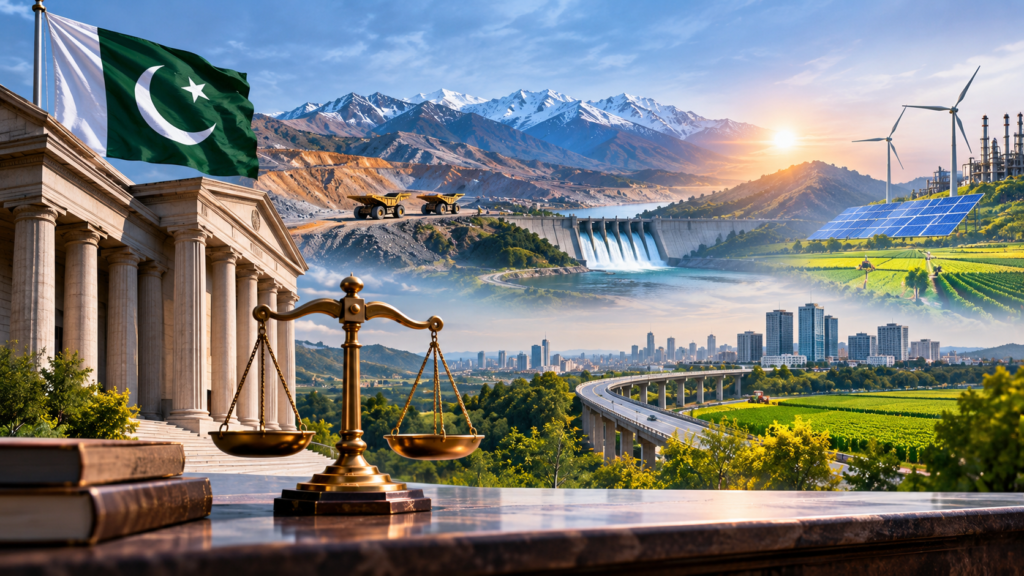
Pakistan possesses considerable natural resources, yet its economic potential remains constrained by weaknesses in governance, institutional capacity and resource management. Achieving this requires good governance and strong institutions, which Pakistan continues to struggle with. Weak institutions contribute to corruption, favouritism, political interference, limited accountability and weak enforcement of the rule of law. At the same time, powerful elites benefit from the existing system and therefore have little incentive to support institutional reforms. Such reforms could threaten their privileges, political influence and economic interests. Consequently, these elites often resist change and attempt to preserve the existing status quo, preventing Pakistan from fully realizing its economic potential. Natural resources alone cannot guarantee prosperity. No matter how many resources a country possesses, it cannot benefit from them effectively if its governance and institutions are weak. Good governance and strong institutions provide the foundation for creating a level playing field and ensuring that national resources are used for the benefit of society. If a country has strong institutions based on accountability, the rule of law and meritocracy, with limited political interference, it can attract investment, develop industries, improve healthcare and education, encourage businesses and create jobs. In contrast, weak governance and institutions can encourage corruption, exploitation and the misuse of public resources. Powerful elites may capture state revenues, enjoy privileges and maintain political affiliations instead of investing resources in development projects. Since these groups benefit from the existing system, they may also resist institutional reforms that could threaten their privileges and political influence.
Therefore, resource wealth can contribute to prosperity only when effective institutions ensure that it is managed transparently and used for broad-based development. Natural-resource wealth can also become a resource curse when it operates under extractive institutions. Instead of using the revenues generated from natural resources for the benefit of citizens, powerful elites may capture these revenues for their own interests. Rather than investing resource revenues in industries, education, healthcare and other development projects, they may use them to strengthen their political position, provide patronage and maintain political loyalty. In this way, resource wealth can increase the political influence and economic power of a small elite while ordinary citizens receive limited benefits from the resources of their own country. The elite may also use these revenues to preserve the existing extractive system, making institutional reform more difficult. Therefore, natural resources can become a curse when extractive institutions allow powerful groups to capture resource wealth instead of converting it into broad-based prosperity.
This raises another important question: why do powerful elites resist institutional reforms? Powerful elites often resist reforms because they are the primary beneficiaries of existing extractive institutions. When important institutions are influenced or controlled by a small group of powerful actors, they can benefit from weak accountability, limited rule of law, favouritism, political connections and the absence of effective checks on their power. Such a system allows them to enjoy economic privileges, political influence and patronage without facing sufficient scrutiny. They have little incentive to support reforms that could threaten their existing advantages. Inclusive institutional reforms could introduce greater accountability, merit-based appointments, political pluralism and competition, which may reduce the power and privileges of established elites. They may therefore attempt to preserve the status quo, maintain excessive concentration of power and resist changes that could undermine their political and economic influence. The alternative is to develop inclusive institutions that create the conditions necessary for broad-based prosperity. Inclusive institutions provide a level playing field and equal opportunities to citizens. They allow people to develop their abilities, demonstrate their talents and improve their living standards through their own efforts. Inclusive economic institutions also give individuals the freedom to establish businesses, introduce new ideas and compete in the market. Secure property rights provide people with confidence that the wealth they create will be protected, encouraging them to invest, work harder and contribute to economic growth. Furthermore, inclusive institutions support investment in important areas such as education and healthcare. By providing access to quality education and skills development, they enable people to become more productive and innovative. Most importantly, inclusive institutions allow competition and creative destruction, enabling new businesses, technologies and ideas to challenge less productive existing arrangements. In this way, inclusive institutions transform individual talent and initiative into wider economic prosperity.
However, strong institutions alone are not enough if economic policies remain unpredictable. Policy stability is essential for attracting and retaining investment because investors need predictable conditions to estimate their potential profits, costs, productivity and employment opportunities. In Pakistan, frequent changes in economic and tax policies can create uncertainty and discourage both domestic and foreign investors from making long-term investments. Investors may also hesitate when successive governments abandon projects initiated by previous governments and introduce new ones, because they cannot be certain that their own long-term projects will receive continued government support. This is particularly important for investments that require large amounts of capital and long-term planning. In addition, terrorism, insurgency and political violence can increase the risks and costs of operating a business and may discourage foreign investors from entering the country. Therefore, Pakistan needs durable economic policies, continuity across governments and a secure environment to build investor confidence, encourage long-term investment and generate employment. Education, human capital, technology and innovation are also essential for transforming institutional opportunities into prosperity. Education enables a country to develop talented and skilled people who can introduce new ideas, establish businesses, invest, innovate and discover new solutions. Human capital increases a society's ability to respond to economic crises because educated and skilled people are better equipped to identify problems and develop effective solutions.
Similarly, technology and innovation can increase productivity by making production more efficient and reducing the effort and resources required to perform different tasks. Therefore, even a country rich in natural resources may struggle to achieve sustained prosperity if it fails to invest in education, human capital, technology and innovation. However, extractive institutions may restrict these opportunities because educated citizens can question existing power structures, while innovation and new technologies can challenge established economic interests. Thus, inclusive institutions encourage human potential and innovation, whereas extractive institutions may suppress them to protect the power and privileges of existing elites.
Finally, citizen participation is essential for building prosperous and accountable institutions. A country may possess abundant resources, but if its citizens remain politically and economically disengaged, rulers may face little pressure to act in the public interest. In such circumstances, weak accountability can create opportunities for corruption, abuse of power and policies that benefit a narrow group rather than society as a whole. In contrast, active citizens can hold rulers and institutions accountable through voting, peaceful protest, public debate, media and legal mechanisms. When citizens actively participate in political affairs, rulers know that their decisions can be questioned and that they may face political or legal consequences for abusing their authority. This creates an incentive for governments to respond to public demands and work for the welfare of citizens. Therefore, active citizenship is an important part of maintaining accountability and encouraging long-term institutional reform.
Pakistan's economic challenge is therefore not simply a shortage of resources. The country possesses natural resources, human talent and considerable economic potential, but these assets cannot automatically produce prosperity. Institutions determine how political and economic power is exercised and how national resources are converted into opportunities for citizens. If Pakistan strengthens accountability, the rule of law, meritocracy, political pluralism and property rights, it can create a level playing field in which citizens are able to develop their talents, establish businesses and innovate. At the same time, durable economic policies, security, education, technology and active citizenship are necessary to sustain this progress. Changing governments alone cannot guarantee prosperity; Pakistan needs lasting institutional reforms that survive changes in political leadership. Ultimately, the country's future depends not merely on how much wealth it possesses, but on how effectively its institutions enable that wealth to benefit society as a whole.
The views presented in this article are the authors’ own and do not necessarily reflect the views of Global Strategic Forum – GSF

Copyright © 2026 by GSF Team
Comments
0No comments yet. Be the first to comment.