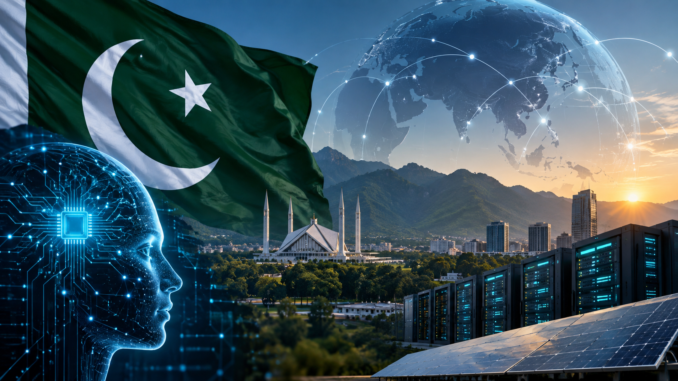
National Capability, Strategic Autonomy and Global Partnerships
When a prime minister stands before technologists and tells them that artificial intelligence is “a fundamental cornerstone of national progress” rather than a distant prospect, the room hears two things at once: the ambition, and the weight. Pakistan has decided that AI is no longer a conversation to be held on someone else’s terms.
The Indus AI Summit in Islamabad, in February 2026, was not the place where Pakistan first spoke about artificial intelligence. But it was the place where the country, for the first time, put a date on its seriousness. Federal ministries, provincial chief executives, the country’s leading universities, the diaspora in Silicon Valley, and a deputy minister from Ankara all sat in the same room. The Prime Minister’s message was clear: Pakistan would no longer be a passive ob-server of the AI revolution; it would be a regional leader, on the ethical terms it chose. The words were meant to be heard abroad as much as at home.
The Policy Architecture
Pakistan has, finally, a written national policy. National AI Policy 2025 approved by the Federal Cabinet in July 2025 is the country’s first comprehensive framework for the technology. It rests on six pillars: building an AI-ready workforce, fostering research and innovation, enabling ethical adoption across sectors, modernising data governance, attracting in-vestment, and anchoring the work in international partnerships. Read in isolation, it sounds like what any ministry of information technology would write. Read against the absence that came before, it is the beginning of a doctrine.
What made February 2026 different was the Islamabad AI Declaration, adopted at the Indus AI Summit. Where the parent policy is structural, the Declaration is operational. It distils nine foundational principles: sovereign purpose and measurable public value; human accountability under constitutional authority; use-case first pragmatic delivery; sovereign data privacy and trust; explainable, au-ditable and safe AI; a whole-of-government approach to governance; inclusive and responsible innovation; and a private-sector-led, sovereign and open AI ecosystem. The plain meaning is that Pakistan will not let the technology outrun its institutions. The diplomatic meaning, in a year when global AI governance is fragmenting into rival clubs, is that every line is also a flag planted.
Building the Foundation
Thousand GPUs a starter footprint, not a frontier one, but a deliberate foundation on which sovereign capability can be built rather than rented. The more interesting asset is on the grid. Pakistan’s installed electricity generation capacity now exceeds 46,000 megawatts, with significant portions idling during off-peak hours. As solar adoption rises and base load fluctuates, that surplus is becoming a strategic input. The government has begun discussing an allocation of around 2,000 megawatts for high-performance computing and AI data centres in an initial phase. Energy is rapidly becoming the binding constraint of the AI economy worldwide; the countries that can deliver reliable power at scale are the ones that at-tract compute. Pakistan is one of them, and the choice to put idle megawatts to productive use is a quietly consequential one. The talent side mirrors the compute side. One thousand fully funded PhD scholarships in AI by 2030, a nationwide programme to train one million non-IT professionals in AI skills, and an AI curriculum being introduced across federal schools and institutions in Azad Jammu and Kashmir, Gilgit-Baltistan and the remote districts of Balochistan. The geographic spread is not symbolic. It is a recognition that the next generation of AI capacity, if it is genuinely sovereign, will need to be built wherever Pakistan’s young people actually live.
The Sovereignty Question
The OpenAI agreement with the United States Department of Defense, announced in early 2026, surfaced a worry that Pakistani strategists had already begun naming out loud. Frontier AI capability is concentrated in a tiny number of firms and states. When a country’s defence, health-care or financial systems come to depend on those systems, every geopolitical tremor between the consumer country and the provider becomes a portability, performance and reliability risk for essential services. The dependency is not theoretical; it is built into every commercial API call.Less visible but equally serious is the asymmetric visibility problem. A foreign AI provider sees deeper into system usage, latency surfaces and architectural vulnerabilities than the customer state can see back.
Knowledge distillation the practice of compressing a large, general-pur-pose model into a smaller, locally hosted open-system version that runs on domestic infrastruc-ture without routing sensitive data through foreign servers is Pakistan’s answer. Rather than attempting to build trillion-parameter foundation models from scratch, an undertaking that is slow and financially unsustainable at Pakistan’s current scale, the strategy treats distillationas a sovereign capability: take the proven intelligence of large models, repackage it, and own the deployment. This is not anti-globalisation. It is the difference between consuming AI and governing it. A country that hosts its inference, retains its user data and controls its fine-tuning is in a fundamentally different posture from one that does not.
Pakistan’s external posture in AI is unusually deliberate. In July 2026, in Shanghai, the country became a founding member of the World Artificial Intelligence Cooperation Organization WAICO alongside 28 others, including Russia, Indonesia and Kazakhstan. WAICO is emerging as a China-backed platform for international cooperation on AI governance, offering an additional forum for countries seeking a greater role in shaping the international AI agenda. Pakistan’s signature on the founding charter is therefore a strategic act, not a routine one.The China relationship deepens elsewhere. Cooperation on smart agriculture, healthcare diagnostics and broader technology transfer is extending the digital spine of the China-Pakistan Economic Corridor. At the same time, Federal Minister Ahsan Iqbal spent July 2026 touring Silicon Valley, engaging Pakistani-American founders and technologists and asking the diaspora explicitly to serve as a bridge for investment and export promotion. The Turkish Deputy Minister for Industry and Technology joined the Indus AI Summit in person, signalling widening digital co-operation between two countries whose ties deepened visibly across 2025 and 2026.
Pakistan is choosing to sit at several tables. The United States has, by mid-2026, begun telling partners that they must pick sides in the AI race with China. Pakistan’s answer is that selective, multi-directional engagement is not indecision; it is the spatial logic of a country whose economy, security and energy footprint each require different partners. The posture resembles the strategic ambiguity the country has practiced for decades in other domains, applied now to the technology on which every other domain is about to depend.
AI Across the Economy
The most legible wins of Pakistan’s AI bet will be unglamorous. In agriculture, machine-learning models are already reading satellite imagery and soil data to predict weather, detect crop dis-ease and guide irrigation precisely the kind of use case where a 220-million-strong country that still feeds itself from rain-fed farmland can multiply the yield of every additional percentage point of accuracy. In healthcare, AI-assisted medical imaging and patient triage are gaining ground in tertiary hospitals and district-level clinics alike. The national e-office programme is rolling the federal government’s own paperwork onto digital rails; for the first time, the state is an early customer of its own AI sector. Defence is the harder, less public frontier. The 2025 India-Pakistan crisis has also intensified discussion within Pakistan’s strategic community about autonomous systems, AI-enabled intelligence analysis and counter-UAS technologies. The argument inside Pakistan’s strategic community is selective modernisation: build sovereign AI capability in the exact places where reliance on a foreign vendor would be a strategic liability, and do not waste capital trying to match frontier-model superpowers at their own game. The same logic, applied across fintech, edtech and the digital public infrastructure that the Uraan Pakistan economic transformation programme envisions, gives the policy a the-matic centre of gravity: use AI where it lowers a constraint, not where it merely signals ambition.
An Honest Reckoning
Implementation has not matched the rhetoric at every turn. Dawn reported in February 2026 that delays had appeared after a government decision to amend the composition of the AI Council, and the Islamabad Declaration continues to compete for attention with the same bureaucratic cy-cles that have slowed earlier digital initiatives. Pakistan still sits at the lower end of the global AI hierarchy. The frontier-tier a handful of US and Chinese firms backed by hundreds of billions in capital expenditure sets the ceiling; the infrastructure-tier, including parts of Europe and a Gulf Cooperation Council that has already committed around thirty billion dollars to AI, occupies the middle; the application-tier, where domain-specific products are built on top of existing mod-els, is where Pakistan currently competes. That positioning is not a verdict. It is a decision point. Capital matters, but it is not sufficient. Building sovereign AI requires deliberate strategy, sound governance and patient risk manage-ment, not just a one-billion-dollar headline. Pakistan’s instinct to argue, at international fora, against the unregulated militarisation of AI is both an ethical position and a national security interest: rules written now will shape the environments in which the country’s drones, its surveillance systems and its decision-support tools will operate for a generation.
A Generational Choice
The country is no longer just consuming AI on someone else’s terms. That, in itself, is a genera-tional shift. The harder question which partnerships to deepen, which dependencies to prune, which sectors to endow with sovereign capability, which global governance tables to sit at and speak from is not yet settled. The investment is bold, the talent programme is unusually large for a country at Pakistan’s income level, and the diplomatic posture is unmistakably assertive. None of this guarantees success. The window in which Pakistan can shape, rather than merely absorb, the next decade of AI is open, but only briefly. The execution that follows will decide whether the country stands among the rule-shapers of the new economy, or remains, however loud its declarations, a careful customer of someone else’s intelligence.
The views presented in this article are the authors’ own and do not necessarily reflect the views of Global Strategic Forum – GSF.

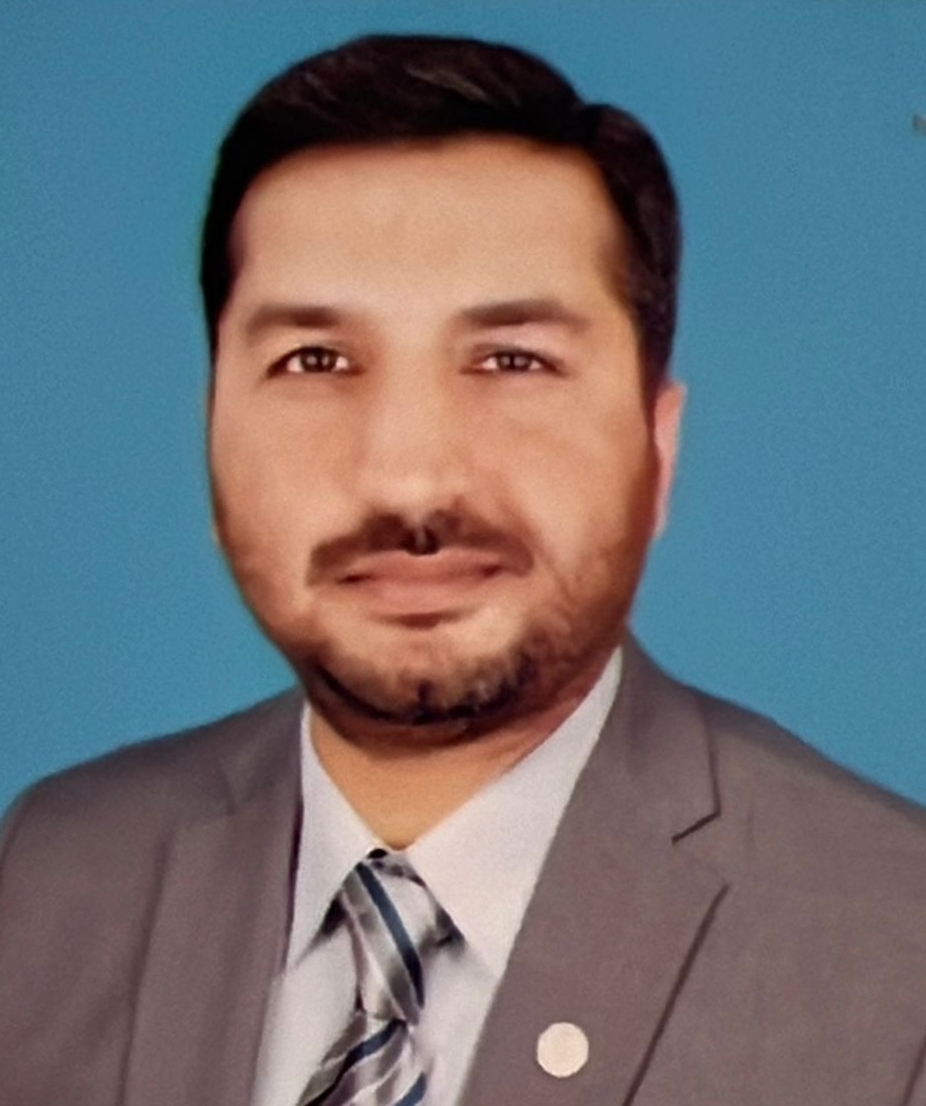
Imran Bhatti
Imran Bhatti holds an M.Phil. in Governance and Public Policy and professional certifications as a Certified Information Systems Security Professional (CISSP) and Project Management Professional (PMP). He is a geopolitical analyst and writer specializing in energy geopolitics, great-power competition, Eurasian strategic affairs, and South Asian security dynamics. His work explores regional geopolitics, border disputes, infrastructure, security, and economic statecraft in an increasingly multipolar world.
- Imran Bhatti

- Imran Bhatti
- Imran Bhatti

- Imran Bhatti

Leave a Reply