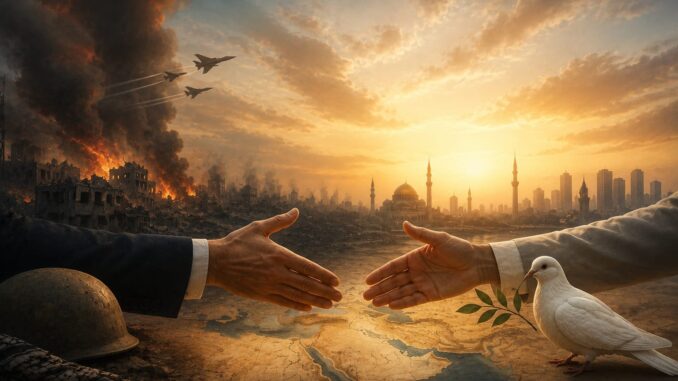
How prolonged conflict, shifting diplomacy, and Pakistan’s emerging mediatory role are reshaping the geopolitical landscape of the Middle East.
Operation Epic fury the codename of the joint military operation launched by the US and Israeli forces against their arch-rival Iran on Feb 28 has come to an end according to the recent statement made by the Secretary of State Marco Rubio but without achieving anything substantive from this joint military offensive against Iran.
On the other hand Pakistan’s stout diplomatic prowess surprised everyone across the globe when owing to hectic diplomatic efforts and outreach by the Pakistan’s civil and military leadership resulted in brokering the truce after cessation of hostilities against each other which not only propelled Pakistan at the centre stage but also elevated its stature as a major peace broker by adopting synergetic strategies to end the war in the Middle east.
Peace parlance held in Islamabad last month and attended by the delegations from the US under the leadership of the US Vice President JD Vance, Gerard Kushner and Steve Vitkof and Iranian foreign minister Abbas Araghchi and other prominent diplomates, opened up a gateway to substantive and sustainable peace negotiations between the two warring nations which earned generous accolade and appreciation from across the globe.
Amid the war rhetorics and launching Freedom project the US president Donald Trump elaborated during a recent press conference that he wants peace to prevail in the conflict hit region and is ready to lift the siege and blockade of the strait of Hormuz.
Apart from this the imminent visit of the US president Donald Trump to China next week seems very crucial. The Reuters has reported recently that Trump’s visit to China is very crucial because of some critical developments in the region after imposing blockade and besiege of the Iranian ports.
“War in the Middle East is no longer a regional crisis, it has become a global threat with far-reaching geopolitical and economic consequences. As tensions intensify, diplomacy and strategic engagement remain the only viable path to lasting peace and stability.”
The political experts and candid commentators of International Relations are of the view that Washington hopes to bring the relationship to normalcy with China but an unprecedented breakthrough doesn’t seem likely to happen under the prevailing precarious circumstances.
The president Trump definitely wants to see the ice starting melting down by securing an economic deal with China as it has witnessed enormous economic downfall squeezing down about 30 % trade contraction previous year.
Likewise, the US president also wants and desires China to use its influence and exert pressure on Iran to end hostilities and de-escalate the tensions in the region for its safe exit from the war zone by securing a face-saving deal amid the mounting economic complexities and financial intricacies as the blockade of the strategic strait of Hormuz has choked the world economies and dismantled the global stock markets with enormous surge of oil fuel prices and the poor nations and the downtrodden segments of the societies have to bear the brunt of the Middle east conflict.
Sun Tzu aptly says there is no instance of Nation benefitting from a prolonged warfare. The wars bring about wholesale destructions and devastations upon which rebuilding process upon the ashes becomes absolutely a daunting task for the aggressors and the vanquished.
The current unprecedented circumstances call for the international players and global institutions to de escalate the war and sow the seeds of serenity and tranquility instead of beating the drums of war lethality.
It is the high time for the global community to intercede between the two warring nations to assist end hostilities as escalation of war is escalation of death toll on either sides.
The views presented in this article are the authors’ own and do not necessarily reflect the views of Global Strategic Forum – GSF.

Prof Sajjad Khattak
A freelance columnist and contributor, can be reached at sajjadkhatak30@gmail.com.
- Prof Sajjad Khattak
- Prof Sajjad Khattak

- Prof Sajjad Khattak
- Prof Sajjad Khattak
Leave a Reply