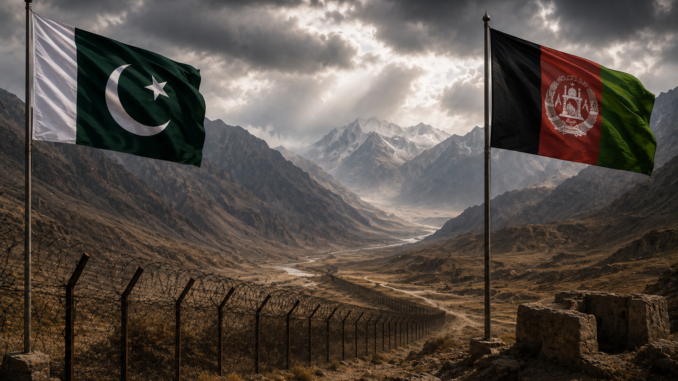
Pakistan-Afghanistan Tensions and the Persistent TTP Threat from Afghan Soil
Ever since the emergence of Taliban regime in Afghanistan in August 2021 ,its soil has turned into a hostile and inimical dilemma for Pakistan which has been a matter of grave concern incessantly for Pakistan and its security apparatus. Recently revealed report by the UN on security threats emanating from Afghan soil has highlighted several significant findings that warrant serious attention, particularly regarding the consequences and repercussions of the tepid strategy adopted by the Afghan regime against the TTP which has continuously been operating from Afghan soil against Pakistan since 2021 after the withdrawal of the NATO forces and ouster of the then Afghan president Ashraf Ghani from Afghanistan.
The inimical and agonistic hostilities carried out by the proscribed TTP against Pakistan have become a bone stuck in the throat for Pakistan ever since falling of Kabul into the hands of Taliban regime as a reign of terror and trepidation has been unleashed by these hostile forces against Pakistan. According to a recent UN report, some of the lethal terrorist groups including IS-K, Al-Qaida, AQIS and ETIM have also maintained a presence in Afghanistan. The continued presence and activities of several terrorist organisations on Afghan soil, coupled with inadequate action by the Taliban authorities, have posed serious security challenges to the entire region.
Apart from this development, Pakistani authorities have also alleged Indian support for militant networks, including the BLA and BLF, whose activities have been reported in Balochistan amid ongoing counterterrorism operations in the context of what Pakistani authorities describe as ‘Fitna al-Hindustan’ and its alleged role in fuelling militancy in Balochistan. A significant number of TTP fighters continue to operate from safe havens in Afghanistan, including areas close to the Pakistan border. However, instead of tightening the bridles of such religiously motivated terrorists of the TTP they have been offered a carte blanche to operate against Pakistan with absolute impunity.
Though Pakistan’s security forces launched Operation Khyber Storm in October 2025 to address this serious threat to the country’s security, the threat posed by TTP operatives and their networks persisted. Consequently, another military operation, Ghazab Lil-Haq, was launched on 26 February 2026 in response to the escalating security threat involving Afghan territory, targeting terrorist hideouts and militant infrastructure. However, the potential threat to national security remains significant. There is no denying of the fact that it is the sheer outcome of an ambiguous stance and strategic ambiguity adopted by the Taliban regime against the TTP, despite repeated messages from Pakistani authorities that Afghan soil must not be used against any neighbouring country, particularly Pakistan, but the reluctant approach adopted by the Taliban regime against the TTP has impeded the path to progress in the region.
Keeping the barbaric burgeoning border tensions on the western border ,it is imperative for the Taliban regime to cut the Gordian knot and act decisively against the TTP and other terrorist groups according to the international norms failing that it must be isolated once and for all as a country exporting terrorism to neighbouring countries must be addressed through firm diplomatic, political and security measures.
The views presented in this article are the authors’ own and do not necessarily reflect the views of Global Strategic Forum – GSF.

Prof Sajjad Khattak
A freelance columnist and contributor, can be reached at sajjadkhatak30@gmail.com.
- Prof Sajjad Khattak

- Prof Sajjad Khattak

- Prof Sajjad Khattak

- Prof Sajjad Khattak
Leave a Reply